Chart Reading
Destiny Matrix Chart Evaluation: How to Review Your Whole Chart
You have generated your chart and read each zone. Now you are looking at a shape full of numbers, and it is hard to tell what the whole thing says. That is where Destiny Matrix chart evaluation comes in.
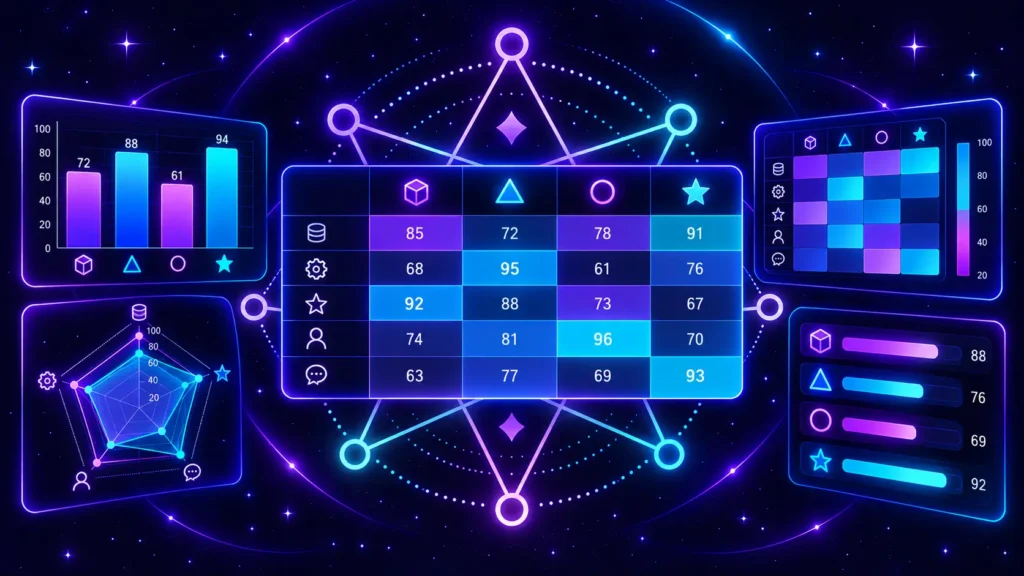
It is the step after you interpret your chart zone by zone. You look at the whole chart (some people call it a graph or a diagram) and notice which patterns stand out.
The Matrix of Destiny is based on numerology, which means giving symbolic meaning to numbers taken from your birth date. This guide is for self-reflection and entertainment only. It does not predict the future or give medical, psychological, legal, financial, or relationship advice.
What Does It Mean to Evaluate a Destiny Matrix Chart?
Destiny Matrix chart evaluation is the process of reviewing your whole chart after reading each zone, looking at balance, repeating numbers, and which themes feel true to you. The process turns separate readings into one reflective summary, and treats every result as a symbolic prompt, not a prediction.
Reading and evaluating are two different jobs. Reading means going zone by zone and learning what each position symbolizes. The chart anatomy guide shows where each zone sits, and the step-by-step reading guide explains the order to read them in.
Evaluating comes after that. You step back and ask bigger questions. Which zones feel active? Which numbers show up more than once? Which readings sound like you, and which do not? The goal is a short, honest summary in your own words, not a verdict on your life.
Go deeper
Want a deeper Matrix of Destiny report?
Download a detailed PDF with expanded interpretations of your core energy, karmic themes, love line, money line, and arcana positions.
Before You Start: Generate and Save Your Chart
You need your date of birth and nothing else. The free Matrix of Destiny Calculator builds your chart in your browser from your birth date, and a first name is optional. Save or screenshot the result so you can come back to it.
Use one chart and one guide at a time. Use this site’s chart guide while you work, so the labels on your chart match the labels in the guide.
Step 1: Check Balance Across the Zones
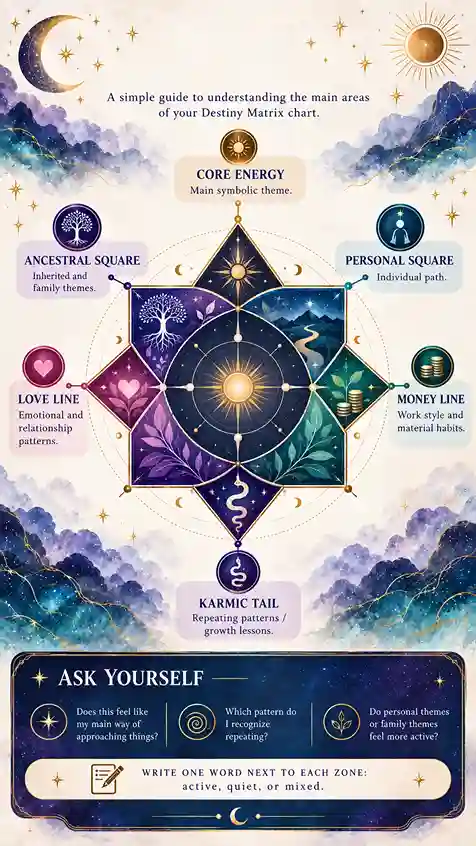
Start your Destiny Matrix chart analysis at the center, then scan the main zones. The chart is drawn as an octagram, an eight-pointed star made from two overlapping squares. Here is what each zone is commonly taken to symbolize, with one question to ask of each:
- Core energy: the center of the chart, read as your main symbolic theme. Ask: does this feel like my main way of approaching things?
- Karmic tail: positions read as repeating patterns or growth lessons, not punishment or fixed fate. Ask: which pattern here do I recognize repeating?
- Love line: a symbolic area for emotional and relationship patterns. Ask: does this describe how I approach close relationships? To set it beside someone else’s chart, try the compatibility calculator.
- Money line: a symbolic area for work style and material habits. Ask: does this match how I work and handle practical matters?
- Personal square: the diagonal square, read as your individual path. Ask: does this sound like my own path?
- Ancestral square: the straight square, read as inherited and family themes. Ask: does this echo family themes I know about?
Step 2: Look for Repeating Numbers and Shared Arcana
The 22 arcana are symbolic archetypes, numbered 1 to 22 in many Matrix of Destiny systems. Each number stands for a theme, a bit like a character in a story. Your chart places these numbers in different positions, and the meaning of a number depends on where it sits.
Scan for repeats:
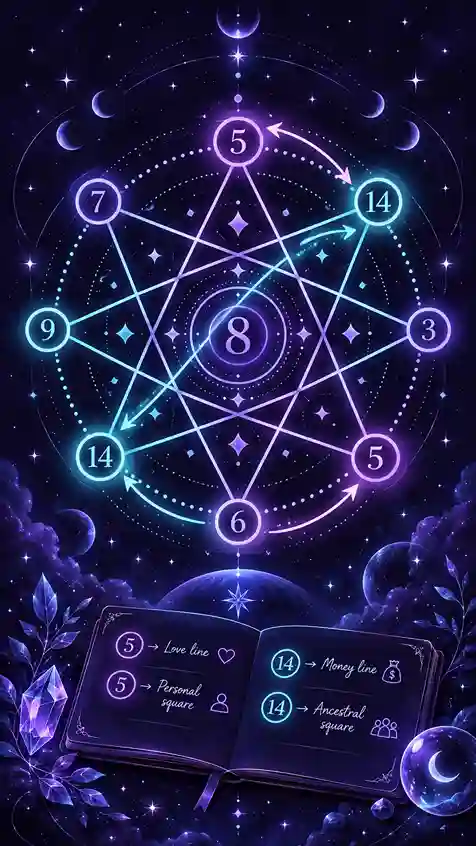
- Find any number that appears in more than one zone.
- Write down which zones it appears in.
- Ask whether those zones share a theme. A number in both the love line and the money line might prompt you to think about how relationships and work overlap in your life.
- Check the Matrix of Destiny chart meaning for each exact position. The same number can be read differently depending on where it appears.
- Compare the two squares: do repeats cluster in the personal square, the ancestral square, or both? Record it as an observation only.
A repeat is a prompt, not proof. Treat it as a good question to explore, not an answer. In symbolic terms, a repeat marks a theme the chart returns to, so read it in each position where it appears.
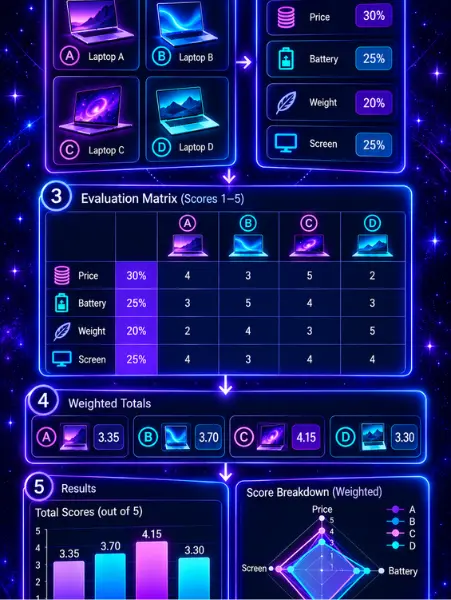
“A scoring grid won’t make the decision for you, but it will show you exactly where your thinking is weak”.
Step 3: Rate What Resonates and What Doesn't
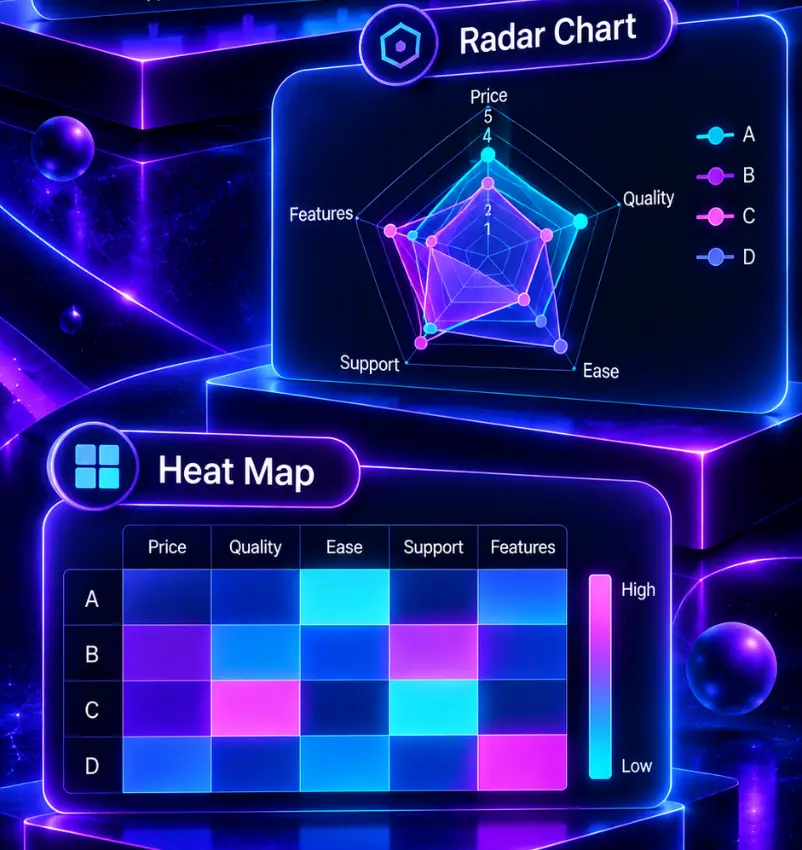
Now rate how well each zone fits you, before you read its longer interpretation. Use three answers only: yes, partly, or no. Skip number scores, because a weighted score would suggest a precision this symbolic system does not have. Use the Destiny Matrix worksheet below.
Whole-chart reflection worksheet
| Zone | What my chart shows | Resonates? (Yes / Partly / No) | One real example or note |
|---|---|---|---|
| Core energy | |||
| Karmic tail | |||
| Love line | |||
| Money line | |||
| Personal square | |||
| Ancestral square |
Fill in the third column first, then read the interpretation. Rating first gives you your own answer to compare with the written reading.
Your chart guide also covers talents and life-cycle areas. Add them as extra rows if you want a fuller review.
Then review your table. “Yes” rows with a real example are your strongest themes. “Partly” rows are often the most useful, because they show where a reading is close but not quite right. “No” rows are fine to set aside.
Step 4: Separate Observation From Interpretation
An observation is something you can point to on the chart. An interpretation is the meaning you attach to it. Mixing them is the easiest way to over-read a chart.
- Observation: “The same number appears in my love line and my karmic tail.” / “My core energy and my money line show different numbers.”
- Interpretation: “That might mean I keep meeting a similar pattern in relationships.” / “That might mean my work life runs on a different theme than my sense of self.”
Keep them on separate lines in your journal notes. Then write a three-line summary:
- What I noticed (observations only).
- What fits me (your yes and partly rows).
- One question I want to think about this month.
Date your notes. Coming back in a few weeks shows you whether the themes still feel true.
Is a Destiny Matrix Evaluation Accurate?
A Destiny Matrix evaluation is not scientifically validated, so it cannot confirm facts about your personality or predict your future. Its value is as a structured prompt for self-reflection. Whether a reading feels accurate depends on your own judgment, and it is easy to notice what fits and overlook what does not.
The Matrix of Destiny is a numerology-based self-reflection system. It draws on numerology, tarot arcana, and symbolic geometry. It is not astrology, and it is not a scientific instrument. This site’s calculator maps the day, month, and year of your birth onto 22 arcana positions using a numerology-based method. If another tool shows a different chart, compare the methods each one states before reading anything into the difference.
What an evaluation can do:
- Give you a structured way to look at your own patterns
- Give you words for themes you already sense
- Start a conversation with yourself or someone you trust
What it cannot do:
- Predict your future or guarantee an outcome
- Diagnose anything or replace medical or psychological care
- Replace professional legal, financial, or relationship advice
Please do not make big decisions based on a chart. Use it to ask better questions, then talk to a qualified person when the decision matters.
Common Evaluation Mistakes
- Counting only the hits. People tend to remember what fits and forget what does not. Rate every zone, including the ones that miss.
- Leaning on one number. A theme is stronger when it shows up in more than one place and also fits real life.
- Evaluating on a bad day. Your mood can color your ratings. If you can, rate your chart twice on different days.
- Comparing your chart to someone else’s result. Positions change with each birth date, so a friend’s reading says little about yours.
Next Steps
Ready to try your own Destiny Matrix chart evaluation? Generate your Destiny Matrix chart, fill in the worksheet above, and keep your three-line summary. Come back to it in a few weeks and see which themes still feel true.
Remember that every result here is symbolic. It is for entertainment and self-reflection, and it does not replace medical, psychological, legal, financial, or relationship advice.
Questions
Frequently asked questions
What should I look at first when evaluating my Destiny Matrix chart?
Start with the center, commonly read as your core energy. Then check the karmic tail, love line, and money line. Finish with the personal and ancestral squares. Ask of each zone: does this feel active, quiet, or mixed right now?
Is the Destiny Matrix accurate?
The Destiny Matrix is not scientifically validated, so accuracy cannot be proven. Treat it as a symbolic prompt for reflection. If a reading fits you, that can help you think, but it is not evidence of a fixed trait or future event.
How do I know if a Destiny Matrix reading fits me?
Rate each zone yes, partly, or no before reading the long interpretation. Add one real example for every yes. Set aside the no rows. Rate again a few days later, and notice which themes stay consistent.
Can the Destiny Matrix predict my future?
No. Your chart shows symbolic themes drawn from your birth date, not guaranteed events. Use it to ask better questions about yourself. For decisions about health, money, law, or relationships, speak with a qualified professional.
What is a karmic tail in the Matrix of Destiny?
A set of positions read as inherited or recurring patterns — themes to reflect on and grow through, rather than fixed predictions.
Your turn
Generate your Matrix of Destiny chart
Enter your date of birth and explore your core energy, karmic themes, love line, and money line in one place.